Prime House Renovations - A decorating website built around the work homeowners need
A web design and content-structure case for a Caterham decorating business: service choices, local information and a guided quote enquiry.
- Work
- Content structure, web design and development
- Case study published
- Case study updated
The work at a glance
- Put exterior decorating first, with distinct pages for masonry, timber and metalwork alongside the interior services.
- Connected service details, area information and preparation advice so homeowners can check the work before making contact.
- Gave visitors a choice of calling, emailing or sending the details needed to start a quote enquiry.
- Business
- Painting and decorating, based in Caterham, Surrey.
- Visitor task
- Check the service and area, then describe the work for a quote.
- Website scope
- Exterior and interior services, area information, advice and contact routes.
- Publishing structure
- Shared page layouts and centrally maintained service and business information.
Live site
Start with the job at the property
A homeowner may know that the window frames are peeling or the rendered walls need repainting without knowing how a decorator divides up the work. The site needs to connect that everyday description to the right service.
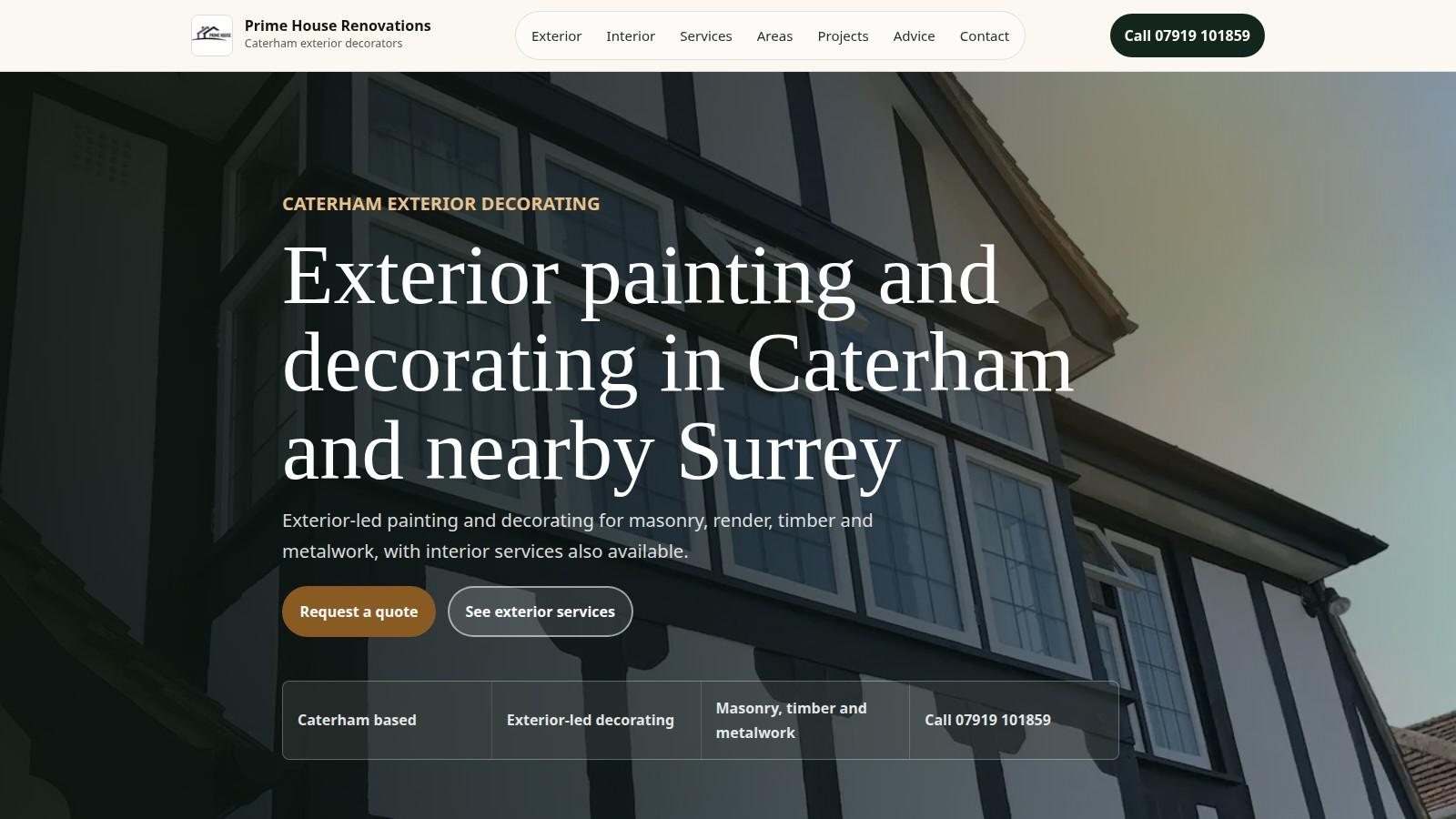
For Prime House Renovations, the main route is exterior painting and decorating in Caterham and nearby Surrey. Masonry and render, timber windows and doors, and metalwork have their own pages. Interior painting and wallpaper work remain available without competing with that exterior focus on every page.
The opening screen makes the service and location explicit, then offers two useful choices: look at the exterior services or request a quote. Someone who already knows what they need can make contact; someone still checking the scope can keep reading.
Service pages that explain the differences
Painting a rendered wall, a timber window and a metal gate involves different preparation. Treating them as one broad list would leave customers to work out which details matter for their home.
The service pages explain the surfaces, their condition, preparation and access. The timber page, for example, covers bare or repaired wood, peeling edges and upper windows. The masonry page explains loose coatings, minor cracks and weather conditions. Those details give a prospective customer something more useful than a general promise of a good finish.
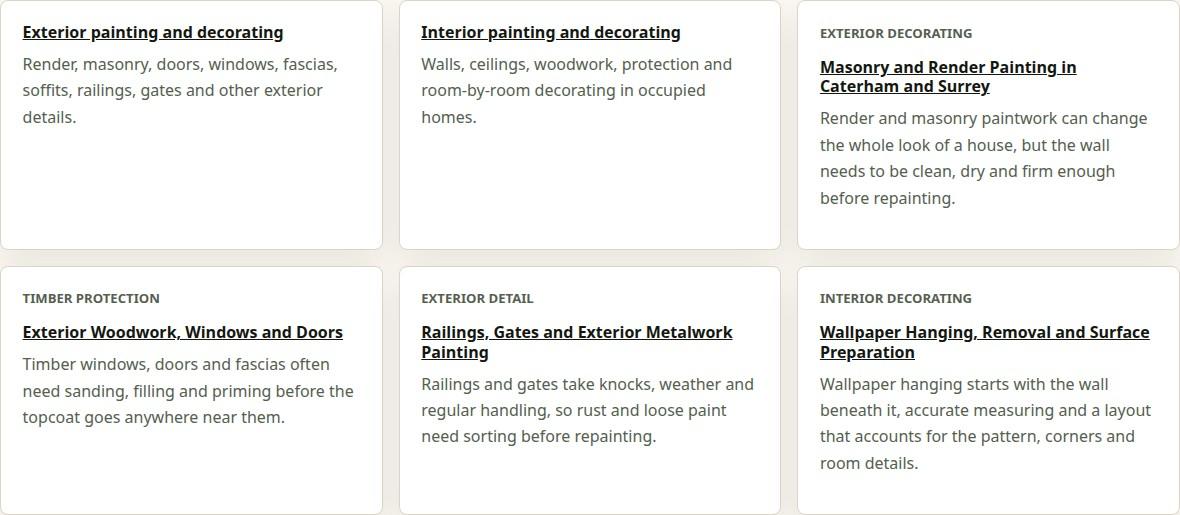
The service overview gives each kind of work a named destination. Captured from the published website in November 2026.
| Visitor question | Where the site answers it |
|---|---|
| Can you paint these surfaces? | Exterior and interior overview pages, with separate service details. |
| What preparation might be involved? | Surface-specific explanations covering existing coatings, repairs and access. |
| Do you work near me? | The Caterham introduction and linked service-area information. |
| What should I tell you for a quote? | The contact page asks for the work, condition, location, access and preferred timing. |
An enquiry that starts with useful information
The contact page offers a phone number and email address alongside the form. Its instructions ask for what needs painting, the current condition, access notes and timing. The aim is to help someone describe the job without having to write a specification.
It also states that the web form does not accept photo uploads. That small piece of copy matters: a visitor should not reach the end of the form expecting to attach photographs and have to start again. The page explains how to discuss photos and provides another contact route if the form cannot be used.
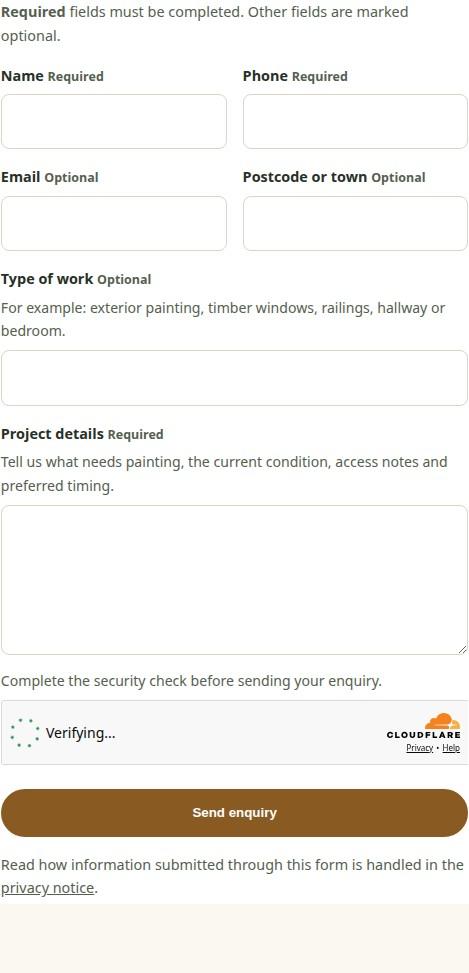
A detail of the enquiry fields, with the information needed for a quote explained beside the inputs. No customer details were entered to capture this screen.
A structure that carries through the site
Service, area and advice pages use shared layouts. Business details are kept centrally, so contact information and service wording can stay consistent across the navigation, pages and footer. Practical advice links back to the relevant decorating work rather than leaving readers at the end of an isolated article.
The screens show the service structure, connected information and enquiry journey. They were captured from the published site in November 2026. The “Case study published” date records when this account of the work was first published.
- Local service website
- Services by surface
- Enquiry guidance
- Consistent page layouts